Words That Ignite Movements
The Role of Poetry in Social Change:
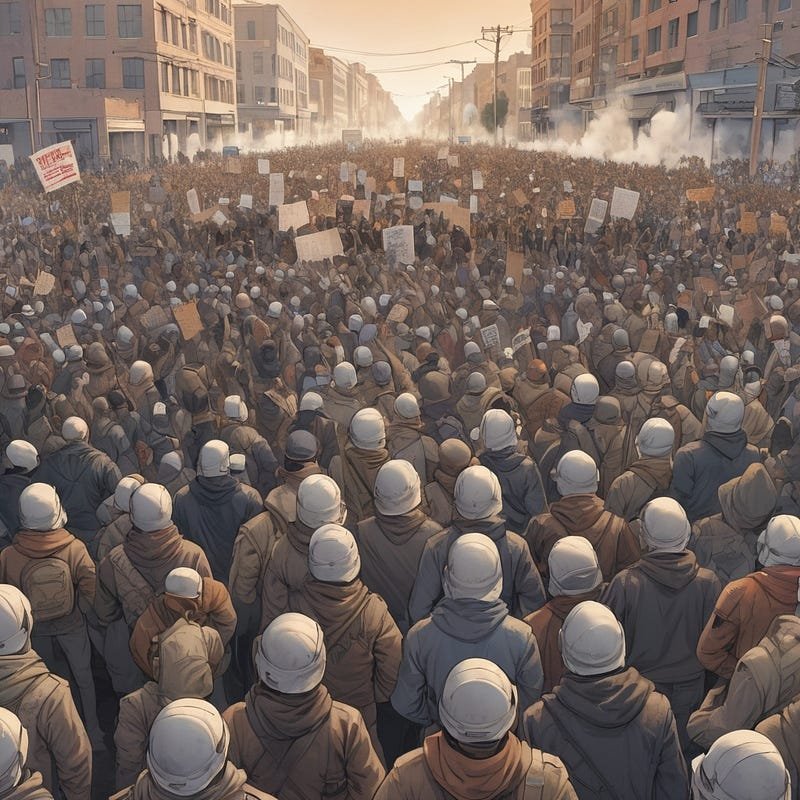
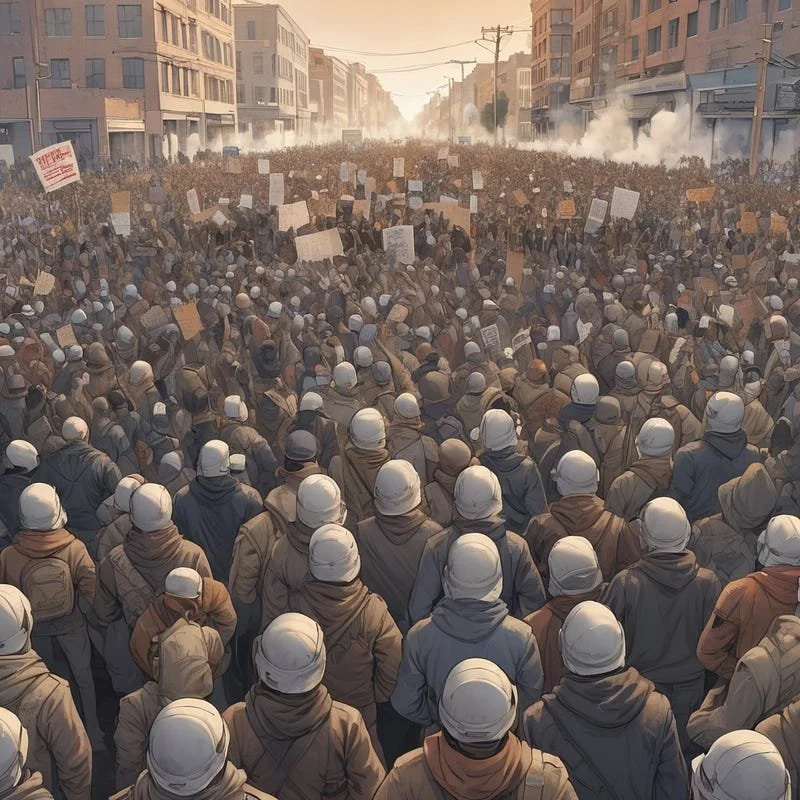
Poetry has long been a force for social change, a means of speaking truth to power and inspiring action. Throughout history, poets have used their words to challenge injustice, give voice to the oppressed, and spark movements that shape the world. Whether through spoken word, protest poetry, or lyrical storytelling, poetry has the power to stir emotions, unite people, and demand change.
The Power of a Poem — By Ed Corbett
A poem is a whisper, a battle cry
A spark in the dark, a fire in the sky
It rises from tongues that refuse to be still
Turning ink into armor, and words into will
It marches with those who have nowhere to stand
A refuge, a weapon, a trembling hand
It echoes through chains, through silence, through walls
A voice for the voiceless when history calls
It weeps with the weary, it sings with the strong
It rights every heartbreak, each centuries’ wrong
With rhythm and rhyme, with fury and grace
A poem can shatter, rebuild, and replace
So when the world stumbles, when justice seems small
A poem still rises, still answers the call
For words are not quiet, nor fragile, nor free
They shape what we are, and what we will be
How Poetry Fuels Social Movements
1. Giving Voice to the Oppressed
When voices are silenced, poetry speaks. It has been a tool for marginalized communities to express their struggles and demand recognition.
Example: Langston Hughes’ “Let America Be America Again”
In this poem, Hughes critiques the American Dream, revealing the disparities between the country’s ideals and the reality for many:
“O, let America be America again —
The land that never has been yet —
And yet must be — the land where every man is free.”
His words became an anthem for those fighting racial and economic inequality, reminding readers of the need for progress.
2. Inspiring Action and Resistance
Poetry is not just about reflection — it is a call to action. Protest poetry has fueled movements, from the civil rights era to modern-day activism.
Example: Maya Angelou’s “Still I Rise”
Angelou’s poem is a declaration of resilience in the face of oppression:
“You may write me down in history
With your bitter, twisted lies,
You may trod me in the very dirt
But still, like dust, I’ll rise.”
Her words are defiant, empowering generations to stand tall against injustice.
3. Uniting Communities Through Shared Struggles
Poetry can bring people together, giving them a shared language for their pain and hope.
Example: Warsan Shire’s “Home”
This modern poem about the refugee crisis highlights the desperation that forces people to flee their homes:
“No one leaves home unless
home is the mouth of a shark.”
Her words humanize the refugee experience, fostering empathy and understanding.
4. Challenging Authority and Exposing Truths
Some of the most powerful protest poems call out corruption, war, and oppression.
Example: Wilfred Owen’s “Dulce et Decorum Est”
Written during World War I, this poem dismantles the glorification of war:
“If you could hear, at every jolt, the blood
Come gargling from the froth-corrupted lungs,
Obscene as cancer, bitter as the cud
Of vile, incurable sores on innocent tongues, —
My friend, you would not tell with such high zest
To children ardent for some desperate glory,
The old Lie: Dulce et decorum est
Pro patria mori.”
Owen’s words reveal the brutal reality of war, countering the patriotic propaganda of his time.
Poetry as a Catalyst for Change
From the Harlem Renaissance to feminist poetry, from anti-war verses to spoken word at protests, poetry continues to shape the world. It is not just words on a page, it is a force that ignites movements, amplifies voices, and demands a better future.
Try It Yourself!
If you want to use poetry as a tool for activism, try these prompts:
Write a poem addressing an injustice you care about.
Use repetition to create a powerful call to action.
Describe the world as it is vs. the world as it should be.
Poetry has the power to move hearts and minds. What poem has inspired you to see the world differently? Share your comments with me Below.

Words of Healing

Writing Poetry as a Form of Healing and Self-Expression
Poetry has long been a refuge for the heart and MIND. a way to process emotions, release pain, and find clarity. Whether scribbled in a private journal or spoken aloud to a crowd, poetry gives shape to what often feels unshaped within us. It allows us to transform grief into beauty, fear into understanding, and joy into something we can relive through words.
Why Poetry is a Powerful Tool for Healing
1. Poetry Helps Us Process Emotions
Sometimes, emotions are too big for simple explanations. Poetry offers a way to express complex feelings through metaphor, rhythm, and imagery.
Emily Dickinson often explored themes of pain and isolation in her poetry:
“I measure every Grief I meet
With narrow, probing Eyes –
I wonder if It weighs like Mine –
Or has an Easier size.”
Her words capture the universality of grief, showing that even our loneliest emotions are shared by others.
Similarly, in “One Art”, Elizabeth Bishop turns personal loss into a structured and meditative form, demonstrating how poetry can help us make sense of pain:
“The art of losing isn’t hard to master;
so many things seem filled with the intent
to be lost that their loss is no disaster.”
By framing loss as an art, Bishop both acknowledges pain and offers a way to cope.
2. Writing Poetry Creates Emotional Release
Poetry can serve as a form of CATHARSIS; a way to let go of difficult emotions. The simple act of putting feelings into words can provide relief and closure.
Sylvia Plath’s poem “Mad Girl’s Love Song” explores heartbreak and mental anguish in a way that feels both raw and transformative:
“I shut my eyes and all the world drops dead;
I lift my lids and all is born again.
(I think I made you up inside my head.)”
Her confessional style allows readers to connect with emotions of longing, despair, and self-reflection.
3. Poetry Provides Perspective and Growth
Writing about past experiences can help us see them in a new light, leading to healing and self-discovery. A poem written in sadness may later become a lesson in resilience.
Maya Angelou’s “Still I Rise” turns pain into empowerment:
“Just like moons and like suns,
With the certainty of tides,
Just like hopes springing high,
Still I’ll rise.”
Her words remind us that even in hardship, we have the power to move forward.
In a different way, Pablo Neruda’s “Tonight I Can Write the Saddest Lines” reflects on lost love with both sorrow and acceptance:
“Love is so short, forgetting is so long.”
His poem is a testament to how poetry allows us to grieve while finding beauty in the experience of love itself.
4. Poetry Helps Connect with Others
Sharing POETRY, WHETHER through performance, social media, or intimate CONVERSATIONS, creates connections. It reminds us that we are not alone in our struggles.
Warsan Shire’s “Home” has resonated with refugees and immigrants worldwide, as it captures the pain of displacement:
“No one leaves home unless
home is the mouth of a shark.”
Her poem not only expresses pain but also builds empathy and understanding.
Similarly, Audre Lorde’s “A Litany for Survival” speaks to those who live on the margins of society, turning fear into a collective strength:
“So it is better to speak
remembering
we were never meant to survive.”
Her words are a rallying cry for those whose voices have been silenced, proving how poetry can inspire courage and solidarity.
How to Use Poetry for Healing
Write without judgment — Let the words flow without worrying about structure or perfection.
Use sensory details — Describe how emotions feel, look, or sound to bring them to life.
Experiment with form — Try free verse, haikus, or sonnets to find what resonates with you.
Revisit your work — Reflect on past poems to see how your emotions have evolved.
Share if you’re ready — Reading your poetry to a friend or community can deepen its impact.
Writing Exercise:
Try writing a poem where each line starts with “I remember…” and explore moments tied to an emotion you’re carrying.
Final Thoughts
Poetry is more than just words on a PAGE, it is a mirror to our emotions, a guide through pain, and a way to transform our experiences into something meaningful. Whether you write to heal, to express, or to understand, poetry offers a space for your voice to be heard.
Have you ever written poetry as a form of healing? Share your thoughts or a favorite poem with me Below.

How to Start Writing Poetry (Even If You’re Afraid to Try)

Let’s face IT, writing poetry can feel intimidating. Maybe you’ve read a few poems and thought, I could never write like that. Or maybe you’ve tried before and felt like your words didn’t measure up. But here’s the truth: poetry isn’t about perfection. It’s about presence. It’s about being honest with your emotions, curious with your language, and willing to explore what lives inside your heart and mind.
You don’t need to be a scholar, a published author, or even “good with words” to write poetry. All you need is the desire to begin.
Let Go of the Myths
Before we dive in, let’s clear away a few common misconceptions:
“Poetry has to rhyme.”
Nope. Some of the most powerful poems are written in free verse — no rhyme, no fixed structure.
“Poetry has to be deep or dramatic.”
Not at all. Poetry can be quiet, funny, quirky, or subtle. It can celebrate a cup of coffee or describe the way sunlight hits the floor.
“Poetry is hard to understand.”
That depends on the writer — and the reader. Your poetry can be as clear or mysterious as you want. What matters is what it means to you.
Simple Tips for Getting Started
1. Start Small
Begin with just a few lines. Don’t worry about creating something long or perfect. Capture a moment, an image, or a feeling.
Example:
The steam rises slowly.
Morning breath of the coffee mug.
I listen to silence.
2. Use Your Senses
Close your eyes and pay attention to what you hear, see, smell, taste, and feel. Sensory details make your poems vivid and real.
Prompt: Describe a room you love using only your senses.
3. Let Emotion Lead
Write about something that made you feel something. It doesn’t have to be dramatic, just real.
Example Prompt:
Write a poem that begins with the words “I didn’t expect to feel…”
Example Lines:
I didn’t expect to feel calm
watching the dishes stack up.
I thought I’d crumble, but here I am,
still standing in the mess.
4. Write First, Edit Later
Let your first draft be wild and messy. Don’t edit as you write. just get it out. Poetry lives in rawness before it finds refinement.
5. Try a Simple Structure
If free verse feels too open-ended, try a structure. Here are a few ideas:
Haiku (5–7–5 syllables)
First frost on the ground
Footprints vanish in silence
Winter has begun
List Poem
Things I never said:
I’m sorry I rushed past you.
I still remember your cologne.
I was afraid too.
“I Am” Poem Prompt:
I am ___
I wonder ___
I hear ___
I want ___
I am ___
A Quick Poetry Prompt List
Here are a few gentle prompts to get you started:
Write about something you lost but didn’t miss.
Describe a memory that feels like a dream.
Write a love letter to your younger self.
What does silence look like? Feel like?
Start a poem with the phrase, “If I could speak to the sky…”
Final Thoughts
Poetry isn’t about getting it right. it’s about showing up with honesty. It’s an invitation to slow down and listen to your inner voice. You already have what it takes to write poetry: your memories, your emotions, your unique way of seeing the world.
So take a deep breath, grab a pen, and begin.
You don’t have to be fearless, you just have to begin anyway.
Voice Becomes the Verse

The Power of Spoken Word Poetry
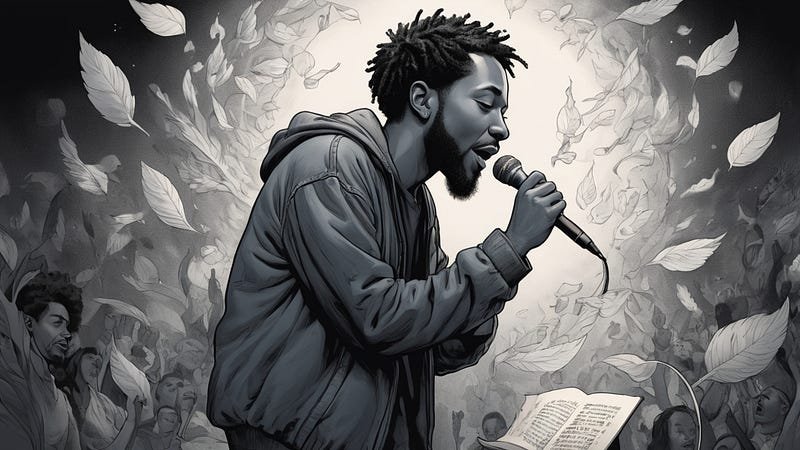
Poetry has always lived beyond the page. it’s existed in whispers, chants, and songs long before it was ever inked onto parchment. In today’s world, spoken word poetry revives that oral tradition with boldness and vulnerability, giving voice to stories that demand to be heard. It’s raw, rhythmic, and often revolutionary.
Spoken word isn’t just about what’s said. It’s about how it’s felt. The cadence, the breath, the pauses between words — all come together to create a living, breathing poem.
What Is Spoken Word Poetry?
Spoken word is performance-based poetry that focuses on the aesthetics of word play, intonation, and voice inflection. Unlike traditional page poetry, spoken word is written to be performed aloud and heard, not just read.
It often explores social justice, identity, love, healing, grief, and personal empowerment. But it can also be humorous, surreal, or deeply introspective.
Why It Matters
Spoken word creates immediate connection between poet and audience. The power of voice allows for tone, rhythm, and emotion to shine in a way that text alone cannot. When you watch someone perform spoken word, you’re not just reading a poem — you’re experiencing it.
Notable Examples of Spoken Word Poetry
Here are a few unforgettable performances that showcase the beauty and impact of spoken word:
1. Sarah Kay — “If I Should Have a Daughter”
In this viral TED Talk, Sarah Kay delivers a heartfelt and lyrical poem about life lessons, parenthood, and growing up. Her performance is soft, powerful, and deeply personal.
“She’s gonna learn that this life will hit you hard in the face… wait for you to get back up so it can kick you in the stomach.”
2. Shane Koyczan — “To This Day”
https://www.youtube.com/watch?v=sa1iS1MqUy4
This animated spoken word poem about bullying and resilience has moved millions. Koyczan’s story-telling style and vulnerability redefine what it means to be brave.
“They asked me what I wanted to be and I said, ‘Not alone.’”
3. Clint Smith — “The Danger of Silence”
A poet and educator, Clint Smith challenges us to speak when silence is the easier path. His delivery is precise, stirring, and unforgettable.
“Silence is the residue of fear.”
4. Dominique Christina — “The Period Poem”
This fierce, unapologetic piece was written in response to a man’s sexist comment online. It’s both a defense of womanhood and a reminder of poetry’s ability to confront ignorance.
“You think I am the weaker sex? You’ve obviously never tangled with a woman on her moon.”
Tips for Writing Spoken Word Poetry
If you’re interested in writing spoken word, here are a few ideas to get you started:
1. Write the Way You Speak
Don’t get caught up in sounding poetic. Speak your truth the way you naturally talk. That’s where the power lives.
2. Use Repetition
Repeating words or phrases adds rhythm and reinforces your message. Think of it like a drumbeat in the background.
“I am enough. I am enough. I am enough.”
3. Embrace Emotion
Spoken word thrives on authenticity. Let your voice shake. Let your words burn.
4. Read It Aloud as You Write
Performance is everything. If it doesn’t sound right when spoken, adjust it. Let your ear guide you.
5. Use Imagery and Specificity
Paint a picture for your listener. Don’t just say “I was sad” — say “I wore my grief like a winter coat in July.”
Why You Should Try It
Even if you never take the stage, writing spoken word poetry helps you find your voice. It’s an act of courage, connection, and clarity. Whether you’re sharing your truth or standing up for someone else, your words have the power to change hearts — and maybe even the world.
Writing Prompt: Your First Line
Start a spoken word poem with one of these lines:
“I remember the first time I didn’t speak up…”
“They called me quiet, but I was never silent.”
“I come from a line of survivors…”
“This poem is not an apology…”
Have you ever written or performed spoken word?
Share your experience or drop a favorite performance link with me Below. Your voice might be the one someone’s been waiting to hear.

Your Words Belong in the Circle

Finding Community Through Poetry
Poetry may often begin in SOLITUDE, in the quiet scribbles of notebooks, in late-night musings, in moments of heartbreak or awe ,but it finds its full power when it’s shared. One of the most beautiful aspects of poetry is the way it builds bridges, connecting people through rhythm, emotion, and truth. Whether you’re a beginner or a seasoned writer, finding a poetry community can ignite your voice in ways you never imagined.
Why Community Matters for Poets
Poetry thrives in connection. When you share your words with OTHERS, WHETHER in a living room writing circle, an open mic, or an online GROUP, you’re not just putting your poem into the world; you’re inviting others into your experience. And in turn, you learn to listen more deeply, think more expansively, and grow as both a writer and a human.
Community offers:
Support: Encouragement through writer’s block or self-doubt.
Feedback: Constructive perspectives to help you sharpen your craft.
Inspiration: Exposure to new styles, voices, and forms.
Accountability: Motivation to keep writing and sharing consistently.
Ways to Find (or Build) Your Poetry Circle
1. Local Open Mics & Poetry Slams
These spaces are alive with energy and authenticity. Whether you’re performing or listening, you become part of a vibrant exchange. Don’t worry if you’re nervous, everyone was new once, and most poetry communities are incredibly welcoming.
Tip: Search online for “poetry open mic near me” or check libraries, cafes, and art spaces.
2. Workshops and Writing Groups
Joining a poetry WORKSHOP, WHETHER in person or ONLINE, gives you a space to grow. You’ll read others’ work, receive thoughtful critiques, and have regular motivation to write.
Example: Organizations like Button Poetry and Poets & Writers often list events and workshops.
3. Online Communities
Platforms like Reddit (e.g., r/OCPoetry), Instagram, Facebook groups, and Discord servers host thousands of poets sharing prompts, feedback, and encouragement.
Bonus: You can remain anonymous or use a pen name until you’re ready to be more public.
4. Create Your Own Circle
Invite a few friends, classmates, or local writers to meet monthly for a poetry share. You don’t need a STAGE, just a living room, a notebook, and some tea. Set ground rules for listening, feedback, and confidentiality so everyone feels safe.
What It Feels Like to Be Seen
There’s something transformative about reading a poem aloud and watching someone nod, tear up, or smile in understanding. Poetry creates sacred SPACE. space for truth, space for healing, space for belonging. In community, you realize you’re not alone in your experiences. Your metaphors matter. Your story resonates.
“Poetry is not a luxury. It is a vital necessity of our existence.” — Audre Lorde
Where to Start
Here are a few places to begin finding your people:
The Poetry Society — poetrysociety.org.uk
The Poetry Project (NYC and online) — poetryproject.org
Poetry Slam, Inc. — poetryslam.com
Instagram hashtags: #poetsofinstagram, #spokenwordcommunity, #poetryprompt
Online workshops: Look for sessions on sites like Eventbrite, Coursera, or Substack newsletters.
Prompt: A Poem About Belonging
Try this simple writing prompt to start building your connection to community:
Write a poem that begins with the line: “I found my voice when…”
Let that line take you where it WANTS; INTO a moment, a room, a conversation, or even a feeling.
Final Thought
You don’t have to be famous, fearless, or flawless to find your place in poetry. You just have to be willing to show up. When you do, you’ll find others waiting for you, with open notebooks, open arms, and open hearts.
Because in poetry, there is always room for one more voice. And maybe, just maybe, that voice is yours.
Let Me know your thoughts Below.